Our History

Nearly a thousand years on one patch of Buckinghamshire.

The land the allotments stand on is first mentioned in the Domesday Book of 1085. What follows is a brisk walk from Saxon smallholdings to the heyday of wartime growing - and on to the Society as it is today.

1066

From Bictric to Bolbec

Before 1066 this land was part of the Manor of Little Kimble under Bictric, almost certainly killed at the Battle of Hastings. William the Conqueror's cavalry destroyed the village and manor on its march to Berkhamstead. Thurstan "Son of Rolf" was given the manor and rented it out to Albert, a local Saxon.

Hugh de Bolbec later built a castle at Little Kimble - only the double motte and the simple stone font, now in Little Kimble Church, survive. The de Bolbecs backed Simon de Montfort; when he was killed at the Battle of Evesham in 1265, the castle was pulled down.
1315

Famine, plague and two messuages

After a disastrous famine in 1315, the village and manor were abandoned, leaving the new church half-built. The land in Clanking was taken into the Manor of Fennells Grove, briefly seized by Edward III and handed to his eldest daughter.

When plague killed a third of England's population, land grew cheap. Local peasants bought what would become the allotments and set up two "messuages" - smallholdings with cottages - probably still working for the Lord of the Manor, but now for cash.

1420

John, Duke of Bedford

By 1420 the Lord of Fennell's Grove was King Henry V's younger brother, John, Duke of Bedford - effectively king of England for fifteen years as regent for his infant nephew. He may well have visited the manor: what is now Doe Hill was once "Dog Hill", home to his hunting kennels, and a warren near Chequers Common bore his name.

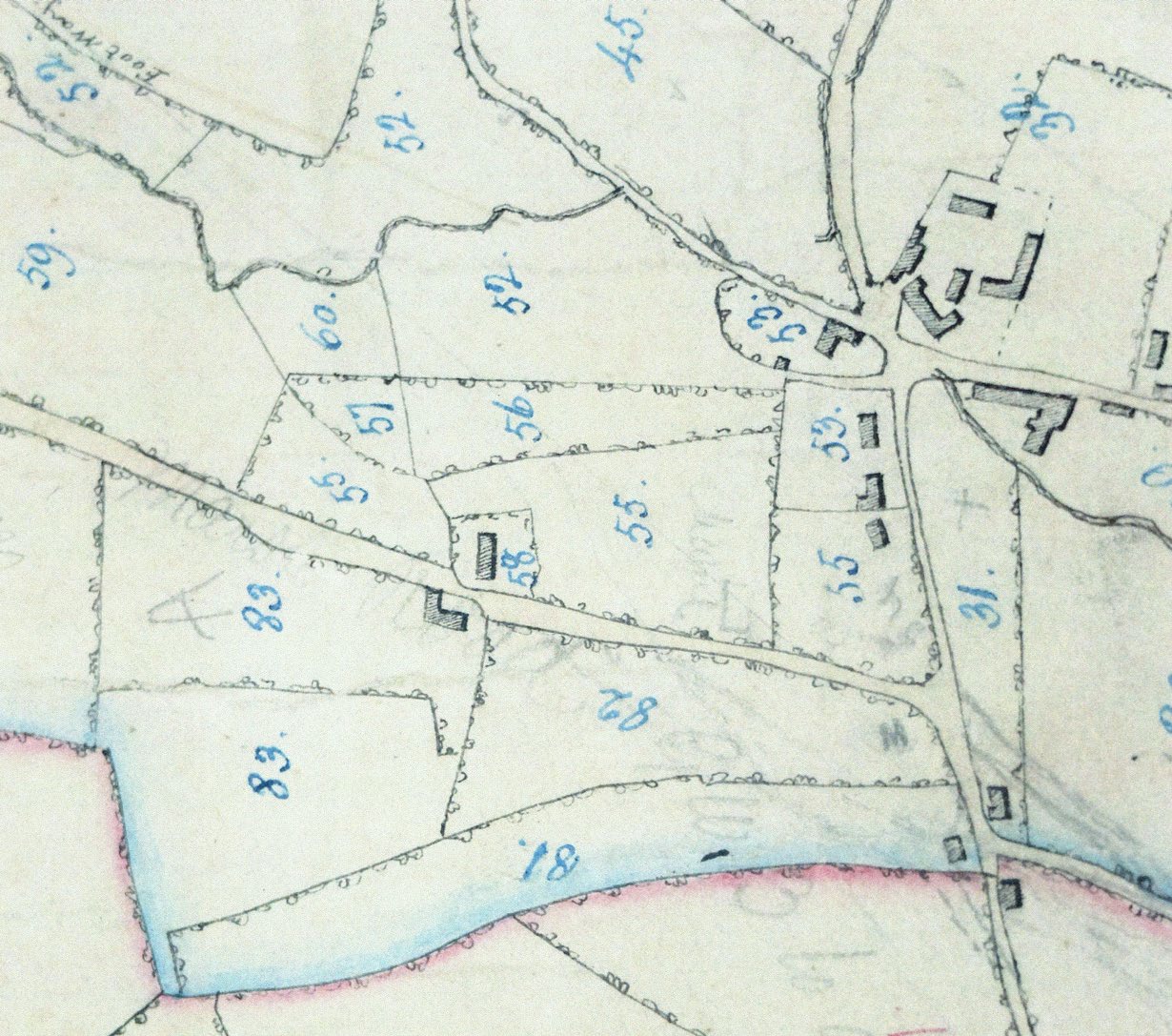
Detail from the Enclosure Map of 1797–1812 showing the fields that became the allotments
Enclosure Map, 1797–1812. The allotments were then two fields numbered 83; the red line is the parish boundary.

1812

Enclosure

The village was enclosed in 1812 - common land and open fields split between owners. Allotments were set up to help the poor, but were later sold off in exchange for a ration of coal for the village poor. The long narrow field behind the allotment was once a droveway, used to push Welsh cattle up to Smithfield for slaughter.

1880s

The Rothschild years

The land was bought by the Rothschild family in the 1880s, who built Jasmine Cottage and Thrift Cottage. Ferdinand de Rothschild Junior was killed in Palestine in the First World War, serving with the Bucks Hussars alongside seven other Kimble men.

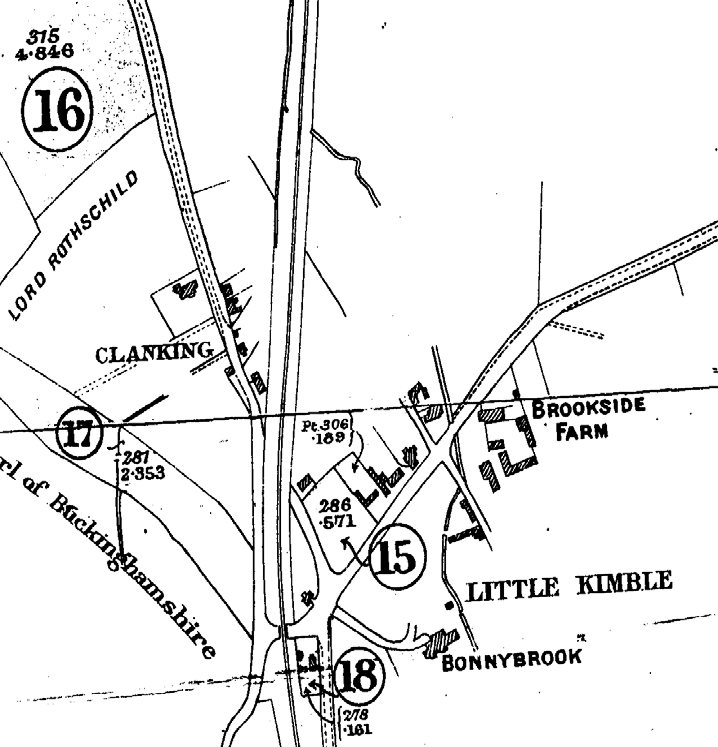
A 1912 map showing the land as belonging to the Rothschild family
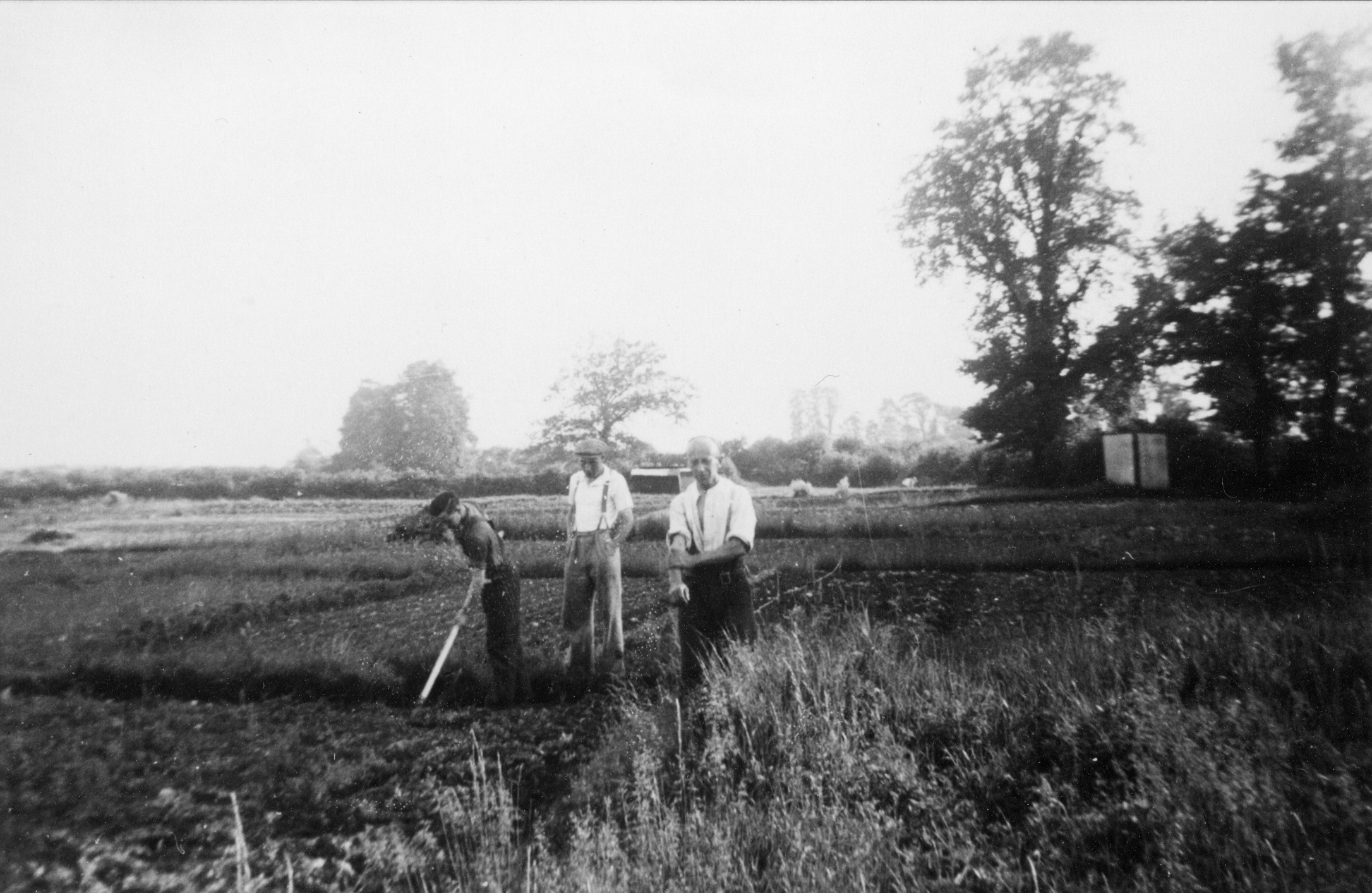
Charlie Adams, Ron Miller (the milkman) and another member at work in 1942. The elm trees behind them died out in the 1970s.
Detail of a 1912 Ordnance Survey map showing Clanking, Little Kimble and the Lord Rothschild estate
Closer detail of the 1912 map: Clanking sits on the road north of Little Kimble, with the Rothschild holdings marked to the west.

1921

The Society is founded

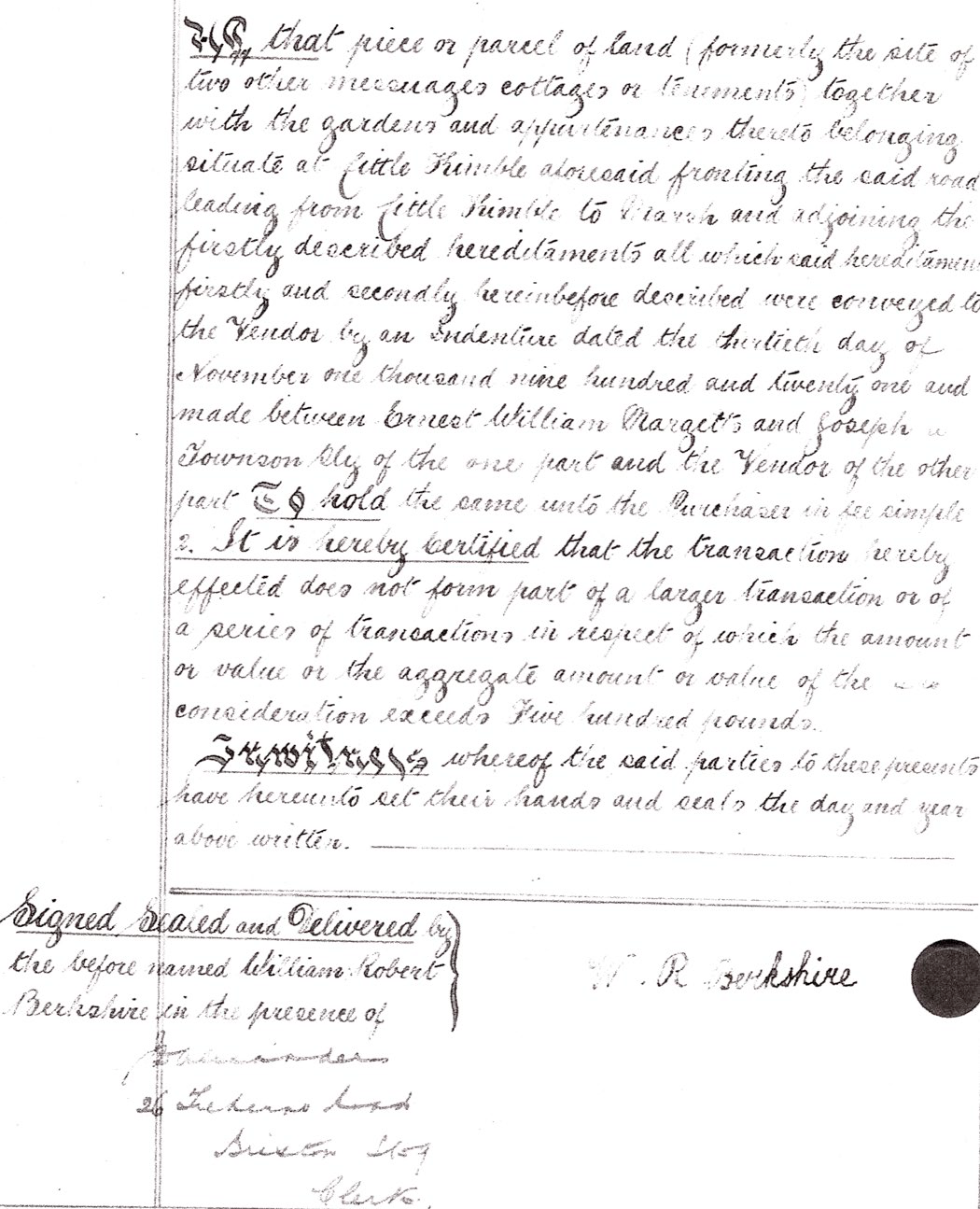
In 1920 a memorial to Ferdinand prompted the parish to buy land and create the allotments. The land was first conveyanced to Ernest Margetts and William Townson, who in November 1921 sold it on for £500 to a company set up to run the allotments.

Members bought shares in the company, paid rent, and sold the shares back when they finished - a quiet structure to keep the land in the parish's hands forever.

An extract from the handwritten 1921 conveyance document, signed by William Robert Berkshire
From the original 1921 conveyance - the parcel of land "formerly the site of two other messuages, cottages or tenements" passing to the new Society for £500.

1942

Wartime heyday

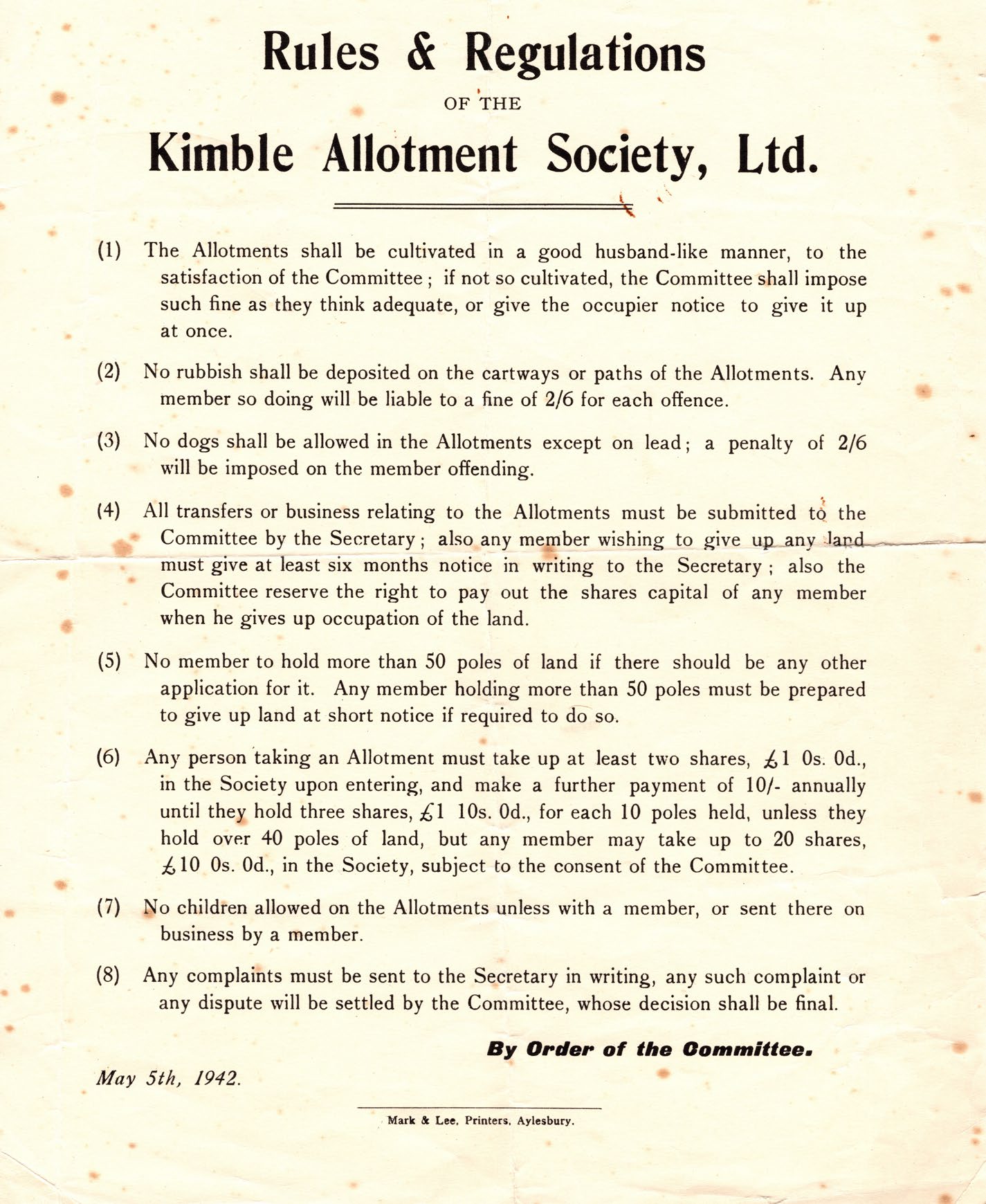
The allotments fed the village through the Second World War and the harsh austerity that followed. Pigs, goats and poultry were kept; a pram once delivered a litter of pigs. The rules were tightened so that "not one inch of land was wasted." The bitter winter of 1947 buried everything in snow, and the thaw left the plots flooded.

Charlie Adams, Ron Miller and another member working the allotments in 1942
These were the revised rules in wartime

Today

A living tradition

We have said goodbye to many stalwarts - Doug and Jean Shirley, Jimmy and Dorothy Malin, Tim Rooke, Dick Green - and welcomed new neighbours at Thrift Cottage and Eadon. There has been a recent influx of new blood, which is very welcome indeed.

Special thanks to Martin Saunders, whose men come and mow and who arranged the water troughs; to Terry for fixing the leak; and to David for taking on Treasurer and Secretary.

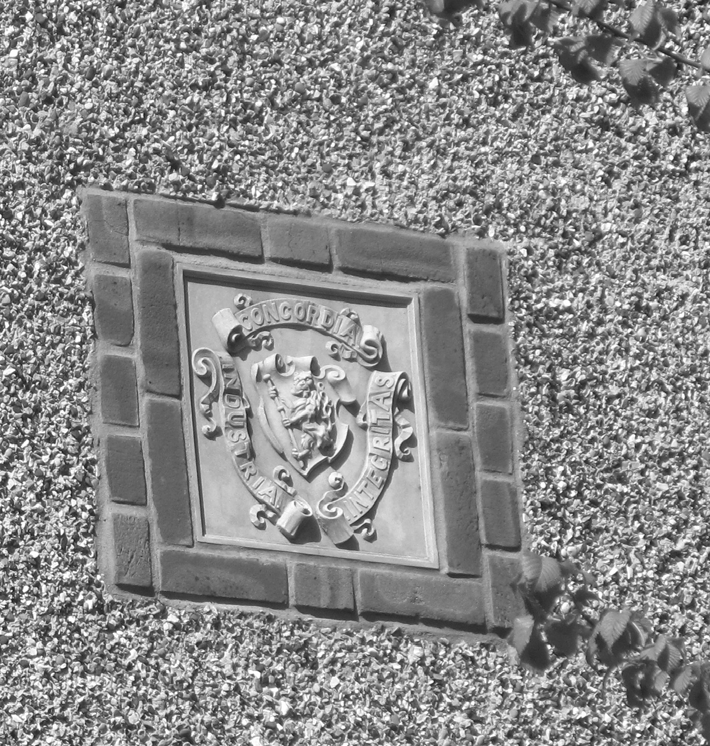
Concordia · Integritas · Industria

A stone-carved coat of arms reading Concordia, Industria, Integritas, set into a pebble-dashed wall
The Rothschild coat of arms - Concordia · Industria · Integritas - still set into the wall of Jasmine Cottage in the village.